
One of the biggest challenges for sports clubs, academies, and residential complexes is the weather: rain, excessive sun, or strong wind can put a tennis court out of use for weeks, affecting revenue, training schedules, and player satisfaction. The solution most sports facility managers are looking for is a covered tennis court — a court with a cover that allows play in any weather condition, all year round.
In this guide, we explain the options available for covering a tennis court, their advantages and drawbacks, and why more and more clubs are choosing modular aluminum structures over traditional construction.
What Does It Mean to Have a Covered Tennis Court?
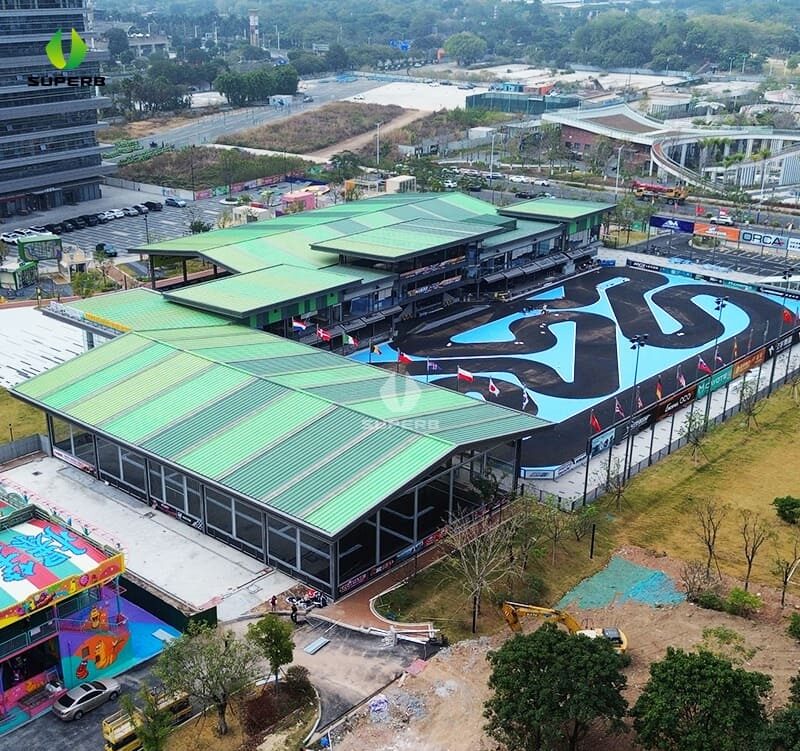
A covered tennis court is one with an upper cover — fixed or demountable — that protects the playing area from rain, direct sun, and strong wind. Unlike a fully enclosed (indoor) court, a covered court can keep its sides open or partially covered, preserving natural ventilation and good lighting while solving the main problem: play being interrupted by bad weather.
Benefits of Covering a Tennis Court
Year-Round Use Without depending on the rainy season or summer weather, the club can schedule lessons, tournaments, and bookings consistently, without last-minute cancellations.
Higher Return on Investment A court that’s out of use due to weather is a court that generates no revenue. Covering it allows the initial investment to be recovered faster by increasing available playing hours.
Protection for the Court Surface and Equipment Constant exposure to UV rays and rain deteriorates the playing surface (especially on clay or artificial turf courts) and the nets. A cover significantly reduces maintenance and extends the court’s service life.
A Better Experience for Players Playing without direct sun or the risk of sudden rain improves comfort and safety for athletes, coaches, and spectators.
Types of Tennis Court Covers
There are three main ways to solve this problem, each with its own advantages and limitations:
1. Traditional Fixed Construction (concrete and permanent roof) Offers maximum durability, but involves high costs, construction timelines of several months, and, in many cases, complex building permits. It’s an inflexible option if the facility ever needs to be relocated or expanded.
2. Inflatable Dome (Air-Supported Structure) An inflatable membrane structure that fully covers the court. It’s typically a temporary solution used in cold climates during winter, but it requires a constant air pressure system and higher electricity consumption.
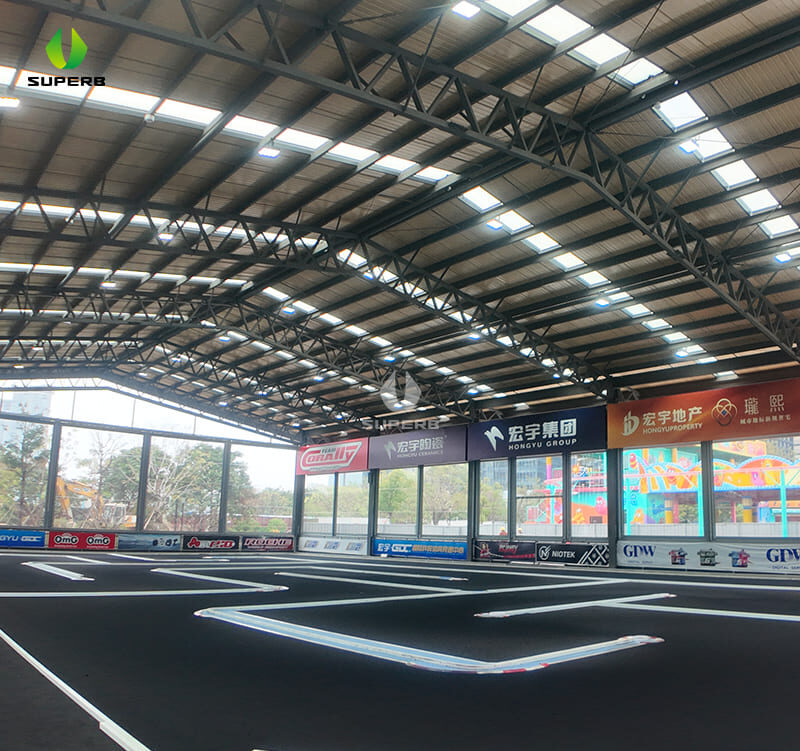
3. Modular Aluminum Tent (Demountable Structure) This is the middle-ground option that combines the best of both worlds: it can be installed in weeks (not months), doesn’t require heavy civil works, and offers a service life of up to 30 years for the aluminum structure. It’s also demountable and relocatable if the project requires it, and can be customized in dimensions, height, and type of sidewall enclosure.
Thanks to its cost-to-benefit ratio, the tennis court tent has become the preferred solution for clubs, academies, and sports complexes looking to cover their court without the time or cost of traditional construction.
What to Consider Before Covering a Tennis Court
- Court dimensions: single, double, or a multi-court complex, since this determines the width and modularity of the structure.
- Required clear height: a tennis court needs more overhead clearance than most other sports courts, to accommodate the ball’s flight path.
- Sidewall enclosure: full walls, partial walls, or roof-only, depending on whether privacy, wind control, or ventilation is the priority.
- Intended use: permanent, year-round use or temporary/seasonal use (for example, only during the rainy season).
- Budget and available installation timeline.
Conclusion
Covering a tennis court no longer means taking on the cost and timeline of traditional construction. Modular aluminum structures offer a fast, durable, and customizable alternative that allows clubs and academies to keep their courts operational year-round, protecting both their infrastructure investment and the player experience.
If you’re evaluating options for your project, check out our tennis court tent solution, purpose-built for this type of sports facility, backed by up to 30 years of structural warranty and international quality certifications.
Tell us your court’s dimensions and intended use, and our technical team will send you a customized proposal within 1-2 business days.
WhatsApp: +86 18128206962
Email: info@superbtentmodular.com
Contact us today for more information and a customized quotation.