
After the magnitude 7.4 earthquake that struck Chocó on August 10, 2026, leaving thousands of homes destroyed and families without shelter, one question keeps coming up among local authorities, NGOs, and communities: how can we be better prepared for the next earthquake?
Colombia sits on the Pacific Ring of Fire, one of the most seismically active regions on the planet. Geoscience experts have pointed out that while the probability of a similar-magnitude earthquake striking the same area again in the short term is low, the country is crisscrossed by numerous active fault lines, and it’s only a matter of time before another region experiences a major seismic event. This makes prevention and rapid response a priority — not only for the government, but also for businesses, communities, and humanitarian organizations.
In this article, we explain what an emergency tent is, why it’s a key tool in any disaster risk management plan, and how to build it into a preparedness strategy before the next disaster strikes.
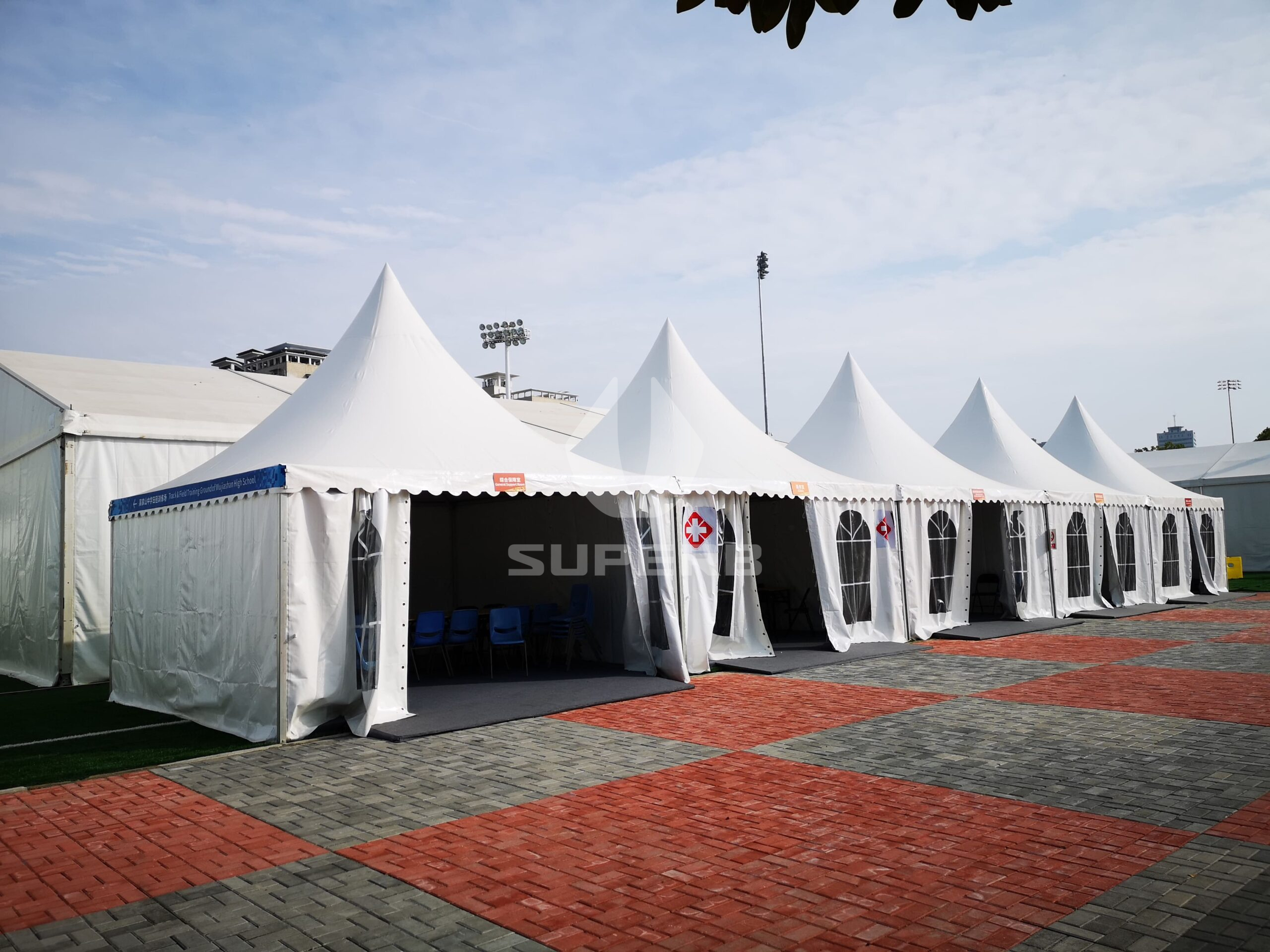
What Is an Emergency Tent?
An emergency tent is a modular, portable, quick-to-install structure designed to provide immediate shelter after natural disasters such as earthquakes, floods, or landslides. Unlike traditional construction, it requires no permanent foundation and no months of building work — it can be set up in a matter of hours or days, making it the first line of response when thousands of people suddenly lose their homes.
A well-designed emergency tent typically includes:
- Aluminum structure resistant to corrosion and to the ground movement caused by aftershocks.
- Waterproof PVC fabric, protecting against rain, wind, and UV radiation.
- Column-free interior design, maximizing usable space.
- Reinforced anchoring system, important in areas expecting aftershocks or strong winds following the main event.
- Modular assembly, allowing the tent to be expanded or reduced in size depending on the number of people or its intended use.
Why Include Emergency Tents in a Disaster Prevention Plan?
Many organizations think of the emergency tent purely as a reactive measure — something purchased or requested only after a disaster has already happened. However, the experience of highly seismic countries such as Colombia, Japan, and Chile shows that advance preparation drastically reduces response time and saves lives.
Here’s why local governments, NGOs, and businesses should consider having emergency tents available before an earthquake occurs:
1. Faster Response Time
When an emergency tent is already stored and ready to deploy, the time between the disaster and sheltering affected families drops from days to hours. This is critical during the first 72 hours, when exposure to the elements can worsen the condition of the injured and the most vulnerable — children, older adults, and people with pre-existing health conditions.
2. A Coordination and Meeting Point
An emergency tent isn’t just temporary housing. It can also serve as a command center, a water and food distribution point, or a makeshift medical facility while damaged hospital infrastructure is restored.
3. Flexibility Across Different Scenarios
Colombia faces multiple natural hazards: earthquakes, floods, landslides, and volcanic eruptions. Because a modular emergency tent is relocatable and adaptable, it can be used across any of these scenarios without needing separate specialized infrastructure for each type of disaster.
4. Long-Term Cost Effectiveness
Investing in emergency tents as part of a contingency inventory is considerably more economical than building permanent shelters that, in many cases, end up underused outside of crisis periods.
Recommendations for Municipalities, NGOs, and Businesses
If your organization operates in earthquake-prone areas of Colombia, here are some recommended practices:
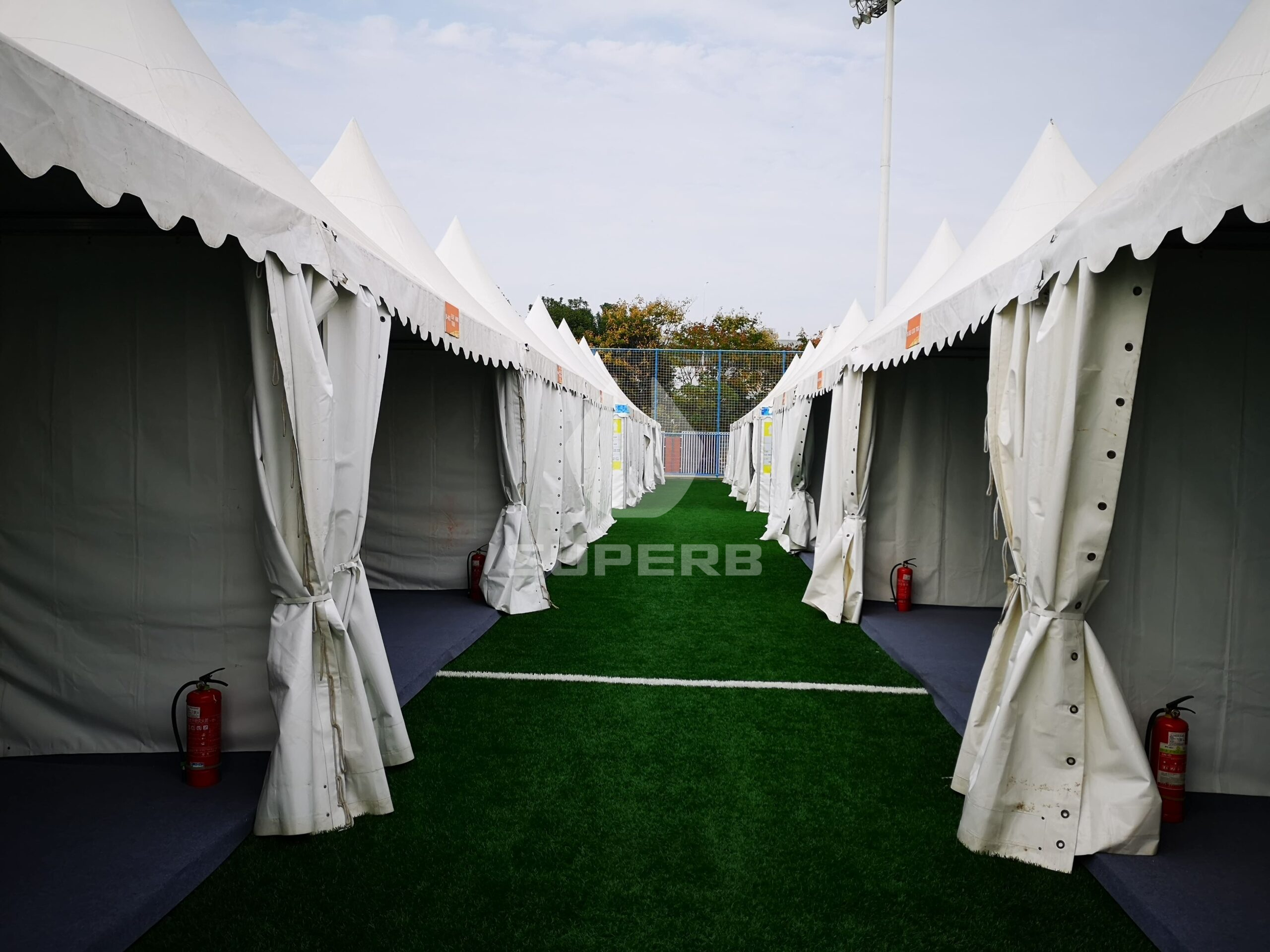
- Maintain a permanent inventory of emergency tents, stored in warehouses strategically located near high seismic-risk zones.
- Train local teams in rapid tent assembly, so you’re not entirely dependent on outside personnel after a disaster.
- Establish partnerships with reliable suppliers who can guarantee fast delivery times once an emergency is declared.
- Run periodic drills that include setting up emergency tents, similar to how evacuation drills are practiced.
- Diversify tent usage (housing, medical care, storage) within your contingency plan to maximize their value at each stage of an emergency.
Our Offer: Emergency Tents Built for Extreme Climates
At Superbtent Modular, we manufacture emergency tents with an aluminum structure (30-year warranty) and waterproof PVC fabric (10-year warranty), certified to international ISO 9001 standards. Our structures are designed for rapid installation, built to withstand demanding tropical climates, and adaptable to multiple uses: temporary housing, field medical centers, or humanitarian supply warehouses.
With a monthly production capacity of over 200,000 m² and export experience across South America, we’re able to respond quickly to large-volume requests.
If your municipality, NGO, or business is looking to strengthen its disaster risk management plan with emergency tents, we’d be glad to discuss your specific needs.
WhatsApp: +86 18128206962
Email: info@superbtentmodular.com
Contact us today for more information and a customized quotation.