
Richard had spent twelve years managing a container yard at a dry port in northern Mexico. He knew every corner of the lot, every route the forklifts took, and above all, he knew the problem that came back every rainy season: water seeped through the joints of the stacked containers, humidity damaged part of the cargo, and workers had to labor under a sun that pushed past 40°C on the metal roofs in summer.
For years, the fix was improvisation. Loose tarps tied down with rope, plastic sheeting the wind ripped off at the first storm, industrial umbrellas that barely covered a couple of meters. None of it solved the real problem: containers were built to transport cargo, not to protect it while it sat exposed to the elements for weeks or months at a time.
Everything changed the day a colleague from another port told him about the container canopy: a freestanding structure, anchored to the ground or to the containers themselves, installed above one or several rows to create a continuous cover. It’s not a makeshift tarp, but an aluminum structure with technical PVC fabric, engineered to withstand wind, rain, and solar radiation for years, without needing to touch or modify the containers underneath.
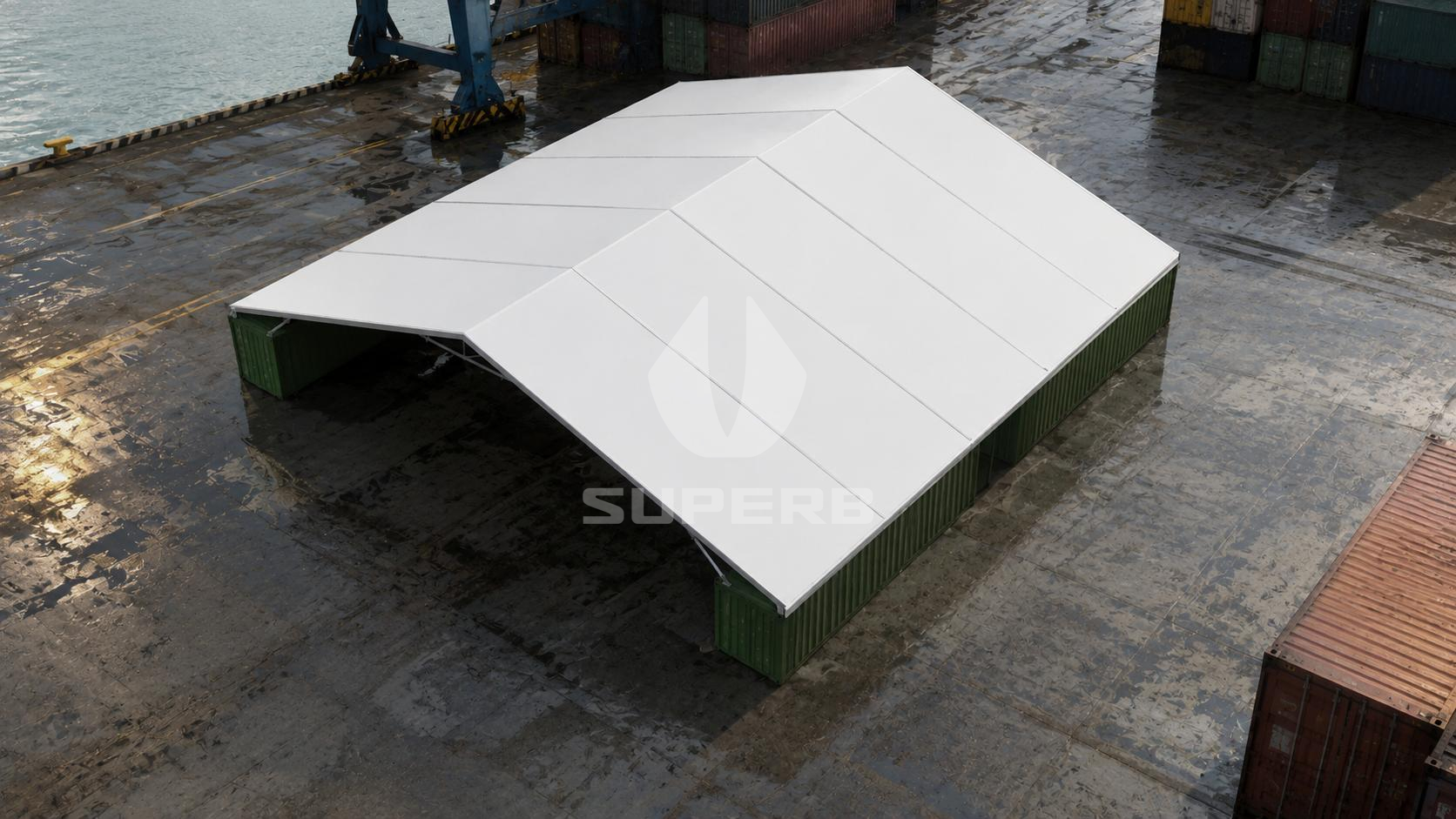
Richard decided to test it on one section of the yard before committing the whole lot. Installation took only a few days. Unlike a conventional building, there was no concrete to pour and no lengthy construction permits to chase; the container canopy anchored directly onto the existing pavement, leaving the containers exactly where they were.
The results were immediate. Through the following rainy season, the cargo stayed dry. Workers no longer labored under direct sun, but under a cover that noticeably lowered the temperature underneath. And something Richard hadn’t anticipated: with a permanent roof in place, he was able to reorganize the yard for more efficient stacking, gaining usable space without expanding the lot itself.
What Richard discovered, without quite realizing it, is a trend repeating itself across ports, free trade zones, and logistics hubs throughout the Americas: a container canopy doesn’t compete with containers, it complements them. While the container remains the unit of cargo and transport, the canopy becomes the permanent protection the container was never designed to provide on its own.
Today, this type of structure is used for far more than keeping the rain out. Port terminals install it to shield moisture-sensitive cargo. Logistics companies use it to create covered picking zones above containers repurposed as warehouses. Even mining and agricultural operations in remote areas have found in the container canopy a way to build covered infrastructure without relying on traditional construction.
When Richard tells this story to other yard managers, he usually sums it up this way: “We didn’t change the containers, we changed what was above them.” And that line, more than any spec sheet, explains why the container canopy has gained ground so quickly across the logistics industry.
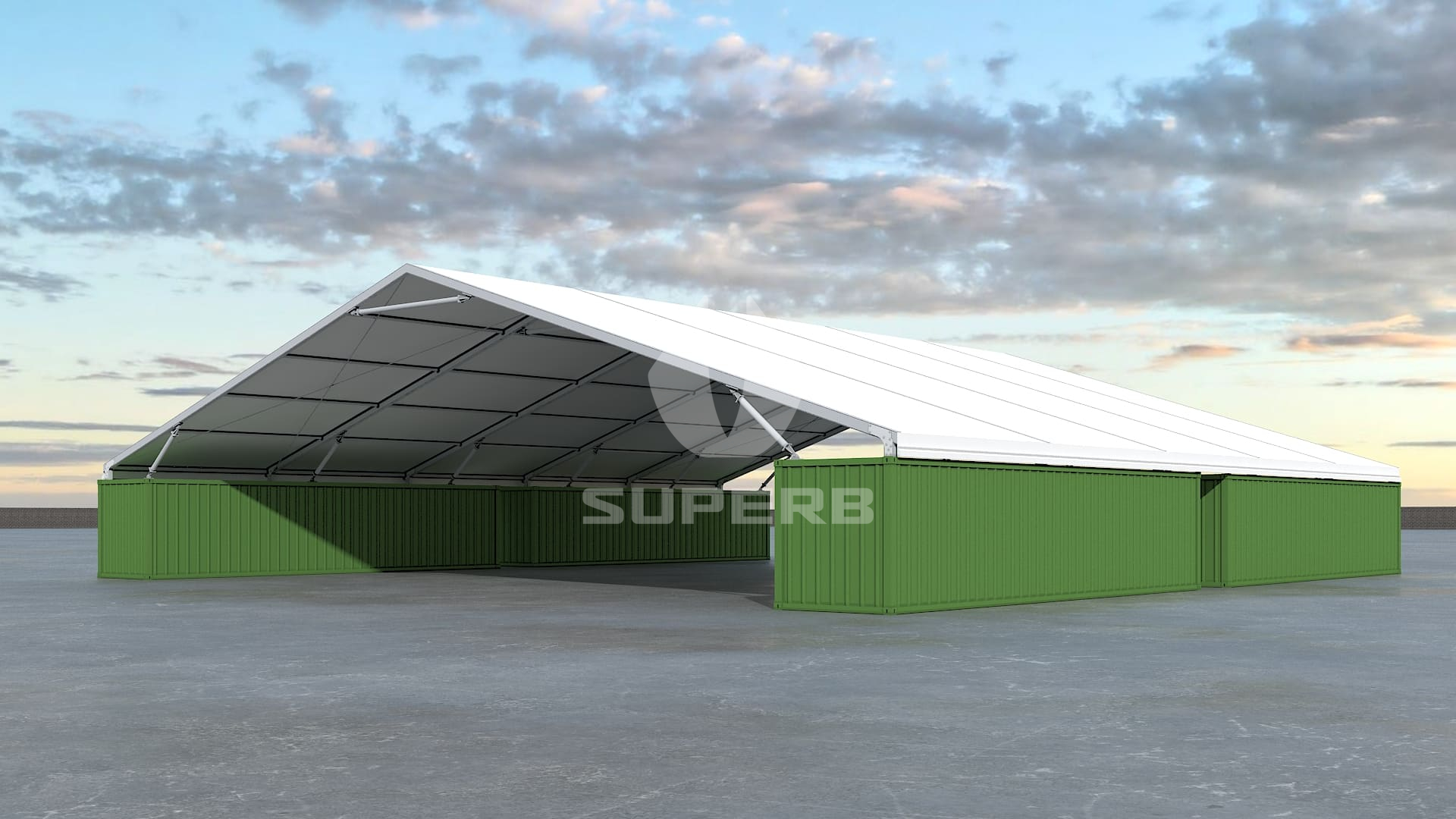
At Superbtent Modular, we manufacture container canopy structures tailored to each yard, port, or distribution center. If your operation is facing a problem similar to Richard’s, we’d be glad to talk through the options available.
WhatsApp: +86 18128206962
Email: info@superbtentmodular.com
Contact us today for more information and a customized quotation.